Eusebius’ The History of the Church, and nearly four centuries later, St. Bede’s The Ecclesiastical History of the English People opened new chapters in the long history of the historiographical tradition. Both works dealt with the formation of the church in different geographies and different periods: Eusebius concerned himself with the broader Eastern Mediterranean world and started his account with the birth of Jesus, whereas Bede began his account with Caesar’s invasion of Britain and covered the formation of the church in Anglo-Saxon England. Even though they followed the historiographical tradition established formerly, their histories were the prominent examples of the genre of church history in historiography, and they represented a divergence from the established historiographical traditions. This paper in detail presents Eusebius’s The History of the Church and Bede’s The Ecclesiastical History of the English People and gives illustrative quotes from both works to indicate the mindset of the mentioned historians. It also aims to discuss the primary motivations behind these historians to construct these particular historical narratives and show how they differed from the previous works of historiography. Moreover, this paper will discuss these historians respectively, starting from Eusebius.
I. Eusebius
Eusebius of Caesarea was probably born in the early 260s in Caesarea, which became a Greek town during the struggles between Ptolemaic and Seleucid kings. He died in the same city in 339/40. Besides The History of the Church, Eusebius was a prolific writer and composed works of different genres. He wrote biblical texts, minor historical works, apologetic and dogmatic works, and his Onomasticon, Chronicon, and Life of Constantine. He was the bishop of Caesarea, and apart from formulating the first history of the church, being an Arian, he was involved in the religious discussions of his period. He witnessed the Great Persecution during the reign of Diocletian in 303, which composed an essential part of his History of the Church.
His first work of history was not his The History of the Church, but his Chronicle, which does not survive in Greek original but Latin and Armenian translations of it are extant, and Eusebius benefited from this work compiling his History of the Church. Having written this work which deals with the history and the formation of the Christian Church, Eusebius invented the genre of church history. He was also aware of this fact since in the first book of History of the Church, he says: “I am the first to venture on such a project and set out on what is indeed a lonely and untrodden path (…).”[1]However, apart from being the leading figure in the formation of the new historiographical genre, Andrew Louth considers him not an original thinker but an erudite scholar in his critical introduction of Eusebius’ History of the Church. Louth also cites Photius from the ninth century, who in his Bibliotheca 13 says: “his style is neither agreeable nor brilliant, but he was a man of great learning.” As noticed by Louth in his History of the Church, Eusebius was always quotes and summarizes different sources that had met. Hence, it is sometimes hard to hear Eusebius’s voice in the progression of the historical narrative. However, no matter how the historical narrative progresses, the fundamental idea of Eusebius writing the first history of the church was original and groundbreaking and influenced many other historians that followed his method, including Sozomen, Theodoret, and Socrates Scholasticus in the following period.[2] Hence, his History of the Church is of utmost importance, and the following chapters will present this work in detail.
II. The History of the Church – Ἐκκλησιαστικὴ ἱστορία
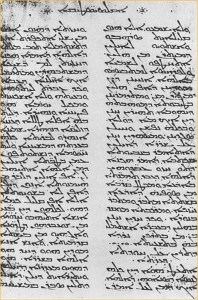
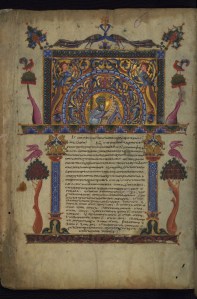
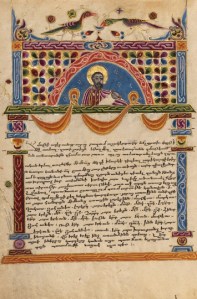
The present paper is based on the English translation of Eusebius’ The History of the Church from Christ to Constantine by G. A. Willamson, published in 1989 by Penguin. This book depends on the standard critical edition of Eduard Schwartz in Die griechischen christlichen Schriftsteller, vol. 9, 3 parts (Leipzig, 1903-9). Indeed, The History of the Church survived in several Greek manuscripts, and there is also a Latin translation of it made by Rufinus (c. 345-450). Moreover, there are Armenian and Syriac manuscripts of Eusebius’ work.
Eusebius wrote his work in ten books and in Koine Greek, structured around the succession of Roman emperors; however, contrary to the previous periods, Eusebius’ work also provides the succession of the archbishops of the four great sees of the pre-Nicene Church: Rome, Alexandria, Antioch, and Jerusalem. Even though this work, starting from the birth of Christ, follows the succession of Roman emperors, following the tradition. However, one novelty of this work is that it presents the respective list of archbishops that correspond to the reigns of each emperor.
Being so the structure of the work, Andrew Louth considers Eusebius’ The History of the Church as “a survey of Christian literature, with excerpts quoted that struck him as interesting.”[3] In this survey of Christian literature, he adds that there are hardly any events between books two and seven. The information related to the events primarily benefits from the chronological structure that Eusebius had formed before. In this way, he also could write the successive list of the reigns of the emperors and archbishops of four big episcopal sees. Moreover, in his critical introduction to the book Louth says that, according to the Christians of that period, Christianity was the “rediscovery of primordial truth,” and hence “The History of the Church records the way in which this rediscovery became universal.”[4]
II.1. Eusebius’ Aims
At the beginning of the first book of The History of the Church, Eusebius clearly indicates his aims in writing such a work. As the following excerpts show, his aims were strikingly different from the previous historiography. All the objectives of the books, they are many indeed, generally revolve around Christianity. In the sentences in which Eusebius expresses his aims, the main structure and motivation of the work manifest themselves. Because, for Eusebius, history was like the succession of the years and centuries which reveal the divine truth and true religion.
Moreover, in this context of religion, there were mainly two groups of protagonists; first, those who were the believers of true religion, and second, those who were the unbelievers and heretics. Apart from minor details, the position of any historical character was very much dependent on their relationship with Christianity. Moreover, events and developments also found themselves a place in the historical narrative of Eusebius as they could reveal the true religion and divine intervention.
To be more precise, Eusebius lists his aims at the beginning of his account, as follows: a succession of the Holy Apostles, periods elapsed from Jesus Christ to his own, recording important events in the story of the Church, showing leading characters in the Christian communities, those who became ambassadors of the Word of God, those who wandered from the Truth through their passion from innovation, after their conspiracy against Jesus Christ what calamities befell the entire Jewish race, the campaign launched against the divine message by the unbelievers, and the martyrdoms:
“The chief matters to be dealt with in this work are the following:
a. The lines of succession from the holy apostles, and the periods that have elapsed from our Savior’s time to our own; the many important events recorded in the story of the church; the outstanding leaders and heroes of that story in the most famous Christian communities; the men of each generation who by preaching or writing were ambassadors of the divine word.
b. The names and dates of those who through a passion for innovation have wandered as far as possible from the truth, proclaiming themselves the founts of Knowledge falsely so called while mercilessly, like savage wolves, making havoc of Christ’s flock.
c. The calamities that immediately after their conspiracy against our Savior overwhelmed the entire Jewish race.
d. The widespread, bitter, and recurrent campaigns launched by unbelievers against the divine message, and the heroism with which when occasion demanded men faced torture and death to maintain the fight in its defense.
e. The martyrdoms of later days down to my own time, and at the end of it all the kind and gracious deliverance accorded by our Savior.”[5]
Having listed all the objectives that Eusebius was willing to pursue in his work, the following sentence after this part expresses another feature of his work. He says, “Could I do better than start from the beginning of the dispensation of our Savior and Lord, Jesus the Christ of God?”[6] This sentence is important because, besides many more examples in Eusebius’s work, it manifests the theological characteristics of The History of the Church. Hence, this book was a book of origins, and one can speculate much about the nature of these origins. However, these explanations and interpretations would be out of the context of this paper. However, it is essential to remember that, though the factual historical narrative of Eusebius’ work starts with the dispensation of Jesus, for Christian thinking, the Christian history and the history of Jesus covers the whole time. Although Eusebius decides a precise time for himself to write his account, through the historical narrative, he implies this omnipresence: “What then is the prevent us from admitting that we, Christ’s followers, share one and the same life and form of religion with those who were dear to God so long ago? Thus, the practice of religion as communicated to us by Christ’s teaching is shown to be not modern and strange but, in all conscience, primitive, unique, and true.”[7]
Nevertheless, what did Eusebius mean by narrating all these? He evidently wants to relate the very beginnings of Christianity. His essential objective was to make people remember what happened and to keep these records for posterity: “If I can save from oblivion the successors, not perhaps of all our savior’s apostles, but at least of the most distinguished, in the most famous and still pre-eminent churches, I shall be content.”[8] His work also assumes an apologetic position since, in The History of the Church, Eusebius tries to answer accusations against Christianity. He especially tries to answer those who thought Christianity was a novelty. As shown at the end of the previous paragraph, for Eusebius, this was not the case. In addition to these, Eusebius wanted to remind his audience of the lessons drawn from history: “I contain not only historical record but the lessons to be drawn from it.”[9] Moreover, in the first book, he says: “(…) records which those who are eager to learn the lessons of history will, I am confident, find most valuable.”[10] Moreover, this paragraph from Eusebius’ account concisely explains all the things explained in this paper previously:
“Other historians have confined themselves to the recording of victories in war and triumph over enemies, of the exploits of the commanders and the heroism of their men, stained with the blood of the thousand they have slaughtered for the sake of children and country and possessions; it is peaceful wars, fought for the very peace of the soul, and men who in such wars have fought manfully for truth rather than for country, for true religion rather than for their dear ones, that my accounts of God’s commonwealth will inscribe on imperishable monuments; it is the unshakable determination of the champions of true religion, their courage and endurance, their triumphs over demons and victories over invisible opponents, and the crowns which all this won for them at the last, that it will make famous for all time.”[11]
II.2. Methodology and Style
As pointed out by Momigliano[12] and Michael Whitby[13] in Oxford History of Historical Writing, the fundamental difference between Eusebius and early Christian historiographers and those who wrote histories before them was that Eusebius and early Christian historiographers attached significance to the documents. Eusebius is a fine example of this phenomenon. We know that he worked in two libraries in Caesarea and Jerusalem. Hence, he had a myriad of sources and documents at his disposal. For example, in the sixth book, Eusebius tells the importance of the library at Aelia (Jerusalem) and says that he also used it:
“Prominent at that period were a number of learned churchmen, who penned to each other letters still surviving and easy of access, as they have been preserved to our own time in the library established at Aelia by the man who then presided over the church there, Alexander – the library from which I myself have been able to bring together the materials for the work now in hand.”[14]
Eusebius always tells his sources; even at the beginning of his second book, he notes that he compiled that part of the book from the works of Clement, Tertullian, Josephus, and Philo.[15] Extensive use of the writings of others -and because of this that Louth criticizes him being not an original thinker- is not surprising at all since, in the first book, Eusebius already says, “in the present work I shall add nothing to what has been said.”[16] In addition to the sources mentioned before, Eusebius collected “those things said” from such sources as Josephus, Hegesippus, Justin, Iranaeus, Pamphilus, Dionysius of Alexandria, ecclesiastical documents and letter, acts of the martyrs, and extracts from the earlier Christian writings.
While writing these sources, Eusebius usually makes citations and uses the sentences he cited verbatim. For example, while presenting Africanus’ letter to Aristides, he says, “I will quote his actual words (…).”[17] In another instance, using Josephus’ Antiquities, he tells readers that he quotes that work verbatim.[18] Mentioning the letter written by Abgar to Jesus, he uses these words: “(…) and the most satisfactory course is to listen to the actual letters, which I have extracted from the archives and translated word for word from the Syriac as follows: (…).”[19] This sentence is significant because he tells the readers that he made translations of the actual documents from Syriac. Again, in the seventh book of History of the Church, he writes: “I shall again enjoy the cooperation of the great Bishop of Alexandria, Dionysius, who in the letters that he left behind furnished an account in his own words of the whole course of events in this time.”[20] Moreover, in most of the third book, about the period between Vespasian and Trajan and the persecutions, he uses Josephus’ Histories. Another excerpt from the fourth book indicates the importance he attached to the documents and how he uses his sources: “Of the dates of the bishops at Jerusalem, I have failed to find any written evidence – it is known that they were very short lived – but I have received documentary proof of this, that up to Hadrian’s siege of the Jews there had been a series of fifteen bishops there.”[21]
Eusebius’ use of different calendars is also worth mentioning regarding his methodology and style. In this paper, the present writer has noted that he hardly dates anything and structures his work following Roman emperors’ succession and the archbishops’ succession of four great episcopal sees, Alexandria, Rome, Jerusalem, and Antioch. Nevertheless, Eusebius also mentioned different calendar systems in his work, which shows the context in which Eusebius wrote his History of the Church and which sources influenced him. One of these calendars is the Macedonian or the Seleucid calendar. When relating the correspondence between Abgar and Jesus, Eusebius says, “All this happened in the year 340,”[22] and that year 340, in the Seleucid calendar, corresponds to year 30. Another calendar he uses is the Greek calendar. In the second book, he notes: “The facts are recorded by those Greeks who have chronicled the Olympiads together with the events occurring in each.”[23] In addition to them, this excerpt shows how he uses the Roman calendar: “In the eighth year of Nero’s reign Annianus was the first after Mark the evangelist to take charge of the see of Alexandria.”[24]
II.3. Main Themes and Other Issues
Contrary to the early historiographical traditions of Graeco-Roman civilizations, in which the essential dichotomy was between the Greeks/Romans versus Barbarians, what Eusebius put forward was the notion of Christian community. In this regard, what he constructed was more global and universal, in a sense more inclusive. However, this inclusiveness had its limits. Given the fact that the essential determiner of one’s own identity was one’s religion (not only religion, indeed, but following the true Orthodoxy in Christianity), in Eusebius’ account, there was also a contrast between the true Christians, “us” for Eusebius, and the others. Hence, the notion of the Christian community was of utmost importance for Eusebius.
Moreover, one’s attachment to any king, or political entity, or any nationality based on shared traditions or language, in Eusebius’ account found a marginal place. The most important identity that one could assume was one’s relationship with Christianity. Furthermore, even though a person could express their faith individually, those persons also felt an attachment to a bigger group which began replacing other identity markers, such as belonging to a city, a king, or a tribe. Hence, contrary to the previous historical narratives, Eusebius realized Christianity as a greater community that surpasses one’s other attachments.
How could he achieve this? Since he wrote a historical narrative in which he related the early formations of Christianity and Christian religion, he decided to start with a date that could symbolize a starting point for all the Christian communities worldwide. Hence, no matter where a Christian community was, a common origin linked Christian communities worldwide. In this sense, one can regard that Eusebius’ mentions of Iranaeus, who was the bishop of Lugdunum, now in Lyon. It is also important to note that, looking at all the sources Eusebius mentioned, a comprehensive and inclusive Christian scholarship had emerged by the time Eusebius started writing his History of the Church. Hence, Eusebius had access to this early Christian literature that emphasizes the same concerns, such as defending Christianity against heresies.
III. Venerable Bede
Bede, or Venerable Bede, was born in AD 631 and died in 735 in Jarrow. He was a monk in Jarrow, ordained as a deacon at nineteen, and a priest at the age of thirty. The primary information about his life indeed comes from the very end of his Ecclesiastical History of the English People:
“I, Bede, the servant of Christ and priest of the monastery of the blessed apostles Peter and Paul at Wearmouth and Jarrow, have assembled these facts about the history of the Church in Britain, and of the Church of the English in particular(…).”[25]
He was a prolific writer who composed many works in chronology, hagiography, and music. However, this paper focuses on just his work of history, The Ecclesiastical History of the English People, in which he relates the formation of the church in the British Isles. This work is also the one with which he contributed to the popularization of AD dating.
He studied mainly Latin and Bible in the monastery mentioned above, which signify the primary elements in writing his Ecclesiastical History of the English People. He also used the library there to collect documentary evidence, which, like Eusebius, contributed much to the historical narrative of his work.
As to the writing style, Bede’s case is similar to that of Eusebius since Bede indeed was following the tradition or the genre of church history established by Eusebius. Since, like Eusebius, constructed his historical narrative around many excerpts and citations from different sources, especially from the ecclesiastical correspondence between Rome and England. However, the essential distinction was that while Eusebius mainly focused on the Eastern Mediterranean World, and except for that, he mentions Irenaeus and Polycarp nothing about the Western Christendom; Bede’s main focus was England and its environs, with a particular focus on the Christendom in France, and in Rome. However, the prevailing idea behind history was the same for both writers; that is to say, they considered history as the realization of the divine plan, which the present paper will further in the following parts also.

In the critical introduction of Bede’s Ecclesiastical History of the English People with Bede’s Letter to Egbert and Cuthbert’s Letter on the Death of Bede (translated by Leo-Sherley-Price in 1990 and published by Penguin Books), D. H. Farmer says that “the quality which makes his work great is (…) his astonishing power of coordinating the fragments of information which come to him through tradition, the relation of friends, or documentary evidence.”[26] Hence, the present paper argues that Bede’s and Eusebius’ historical narratives’ style shows striking similarities. One can also say that Eusebius’ genre of church history had established itself well into the eighth century, and one of Eusebius’ conceptions, the notion of the universal Christian community, realized itself in Britain. Bede’s account of the formation of the Christian church in England and the very existence of the Church is strong evidence for this phenomenon.
IV. Ecclesiastical History of the English People – Historia ecclesiastica gentis Anglorum
This present paper uses the English translation of Bede’s Ecclesiastical History of the English People with Bede’s Letter to Egbert and Cuthbert’s Letter on the Death of Bede, translated by Leo-Sherley Price and revised by R. E. Latham. In this work, D. H. Farmer made the translations of the minor works, a new introduction, and the notes; and Penguin Books published this edition in 1990. This translation relies on the edition done by Charles Plummer (in 1896 and 1956, Oxford) named Baedae Opera Historica. Bede’s Ecclesiastical History of the English People was quite popular in the Middle Ages, a fact shown by the number of manuscripts that survived: around 160.
Bede’s Ecclesiastical History of the English People is the first history of Christian England. He wrote this work in Latin and completed it in 731. He composed his history in five books beginning with Caesar’s invasion of Britain (55 BC) and ending in Bede’s day. Like Eusebius, Bede informs the reader about the myriad of sources that he uses:
“But in order to avoid any doubts in the mind of yourself, or of any who may listen to or read this history, as to the accuracy of what I have written, allow me briefly to state the authorities upon whom I chiefly depend. My principal authority and adviser in this work has been the most reverend Abbot Albinus, an eminent scholar educated in the church of Canterbury by Archbishop Theodore and Abbot Hadrian, both of them respected and learned men.”[27]
In the remaining part of this section, Bede continues to list all the sources he depends on, including Bishop Daniel of West Saxons, monks of Lastingham Monastery, old traditions or writings, Abbot Esi, what he knows himself, and reliable eyewitnesses. In respective parts, he also uses verbatim much papal correspondence, like the letters of Pope Honorius sent to Honorius, Archbishop of Canterbury. Moreover, in the first book, where he relates the Roman dominion in England, his primary source was Orosius.
IV.1. Bede’s Aims
In the preface that he wrote for Ecclesiastical History of the English People, Bede makes this dedication: “To the Most Glorious King Ceolwulf.” Ceolwulf was the king of Northumbria, who reigned between 729-737. Bede, continuing, says that:
“Some while ago, at Your Majesty’s request, I gladly sent you the history of the English Church and People which I had recently completed, in order that you might read it and give it your approval. I now send it once again to be transcribed, so that Your Majesty may consider it at greater leisure. I warmly welcome the diligent zeal and sincerity with which you study the words of Holy Scripture and your eager desire to know something of the doings and sayings of men of the past, and of famous men of your own nation in particular.”[28]
Accordingly, this particular relationship was the primary motivator of Bede to write such a historical account, in which he relates the sayings and doings of the famous men of the English nation. This particular importance given to the notion of the nation was strikingly different from what Eusebius does in his narrative. While Eusebius considered Christianity in its entirety, Bede regarded Christianity in its locality. That is why the narrative in Bede’s account does not start with the dispensation of Christ but a geographical and racial survey of the British Isles and after the Roman rule in Britain. This point allows the modern readers to consider both writers in their context. Eusebius, being the first who ventured such an endeavor, wanted to give an account of the very formation of Christianity, and his account reflects the fragility of new tradition against the established traditions of the Near East. Bede’s account also relates some pagan peoples, wars against them, and some heresies who divided the Orthodoxy, but his account approaches Christianity as a solid and well-established entity, who until Bede’s own time organized itself with an international network of churches.
In this international network of churches, episcopal sees, and monasteries, in such an outlying island like Britain, Bede compels himself to write the relationship of the English Church with Rome, the center of Christianity in Western Christendom. In contrast to Eusebius, Bede does not mention any centers of Eastern Christianity except for Constantinople, which exists in only a few instances, which have not to do with the book’s main narrative. For example, in Chapter 13 in the first book, which describes the reign of Theodosius the Younger, Bede says that at that time (AD 446), there was a famine at Constantinople, followed by a plague. These instances merely reflected Bede’s willingness to inform his readers but nothing more. Since the historical narrative of Bede clearly indicates that the missionary activities in England were much more in the responsibility of Rome and the church there.
One more point also consolidates this standing. The first book, as said earlier, starts with the geographical survey of Britain and Island, and then the story of Roman dominion in England starts. This period covers the reigns of such emperors as Caesar, Claudius, Severus and briefly makes mentions of some political developments that affected the whole empire, like the period of Diocletian and the division of the empire into East and West. However, the historical narrative in the second book starts suddenly with the year 605, when Pope Gregory dies. This time frame and omission of extensive periods explain Bede’s willingness to link Britain with Rome and, in this way, with Christianity. Moreover, in the chapter where he mentions the death of Pope Gregory, Bede describes him as the “apostle of the English nation:”
“And it is fitting that he should receive fuller mention in this history, since it was through his zeal that our English nation was brought from the bondage of Satan to the faith of Christ, and we may rightly term him our own apostle.”[29]
Furthermore, Bede wants to inform his readers about the Roman Church’s interest in converting Britain, thus making Britain an indispensable part of the network of churches. He includes a story of Gregory, who once went to the marketplace and saw some boys to be sold, the then inquired since those boys had attractive physical characteristics: “‘Alas,’ said Gregory with a heartfelt sigh: ‘how sad that such bright-face folk is still in the grasp of the author of darkness, and that such graceful features conceal minds void of God’s grace!”[30]
Likewise, he describes in detail the mission of Augustine, the first archbishop of Canterbury, sent by Pope Gregory in the reign of emperor Maurice (582) to preach to the English nation. At first, Augustine and several accompanying monks had feared that “they were going to a barbarous, and pagan nation, of whose very language they were ignorant.”[31] Pope Gregory encouraged them by writing a letter, and Bede cites this letter also. Then, Augustine and monks (40, rumor has it) came to Britain landed island of Thanet, located on the east of Kent. King Ethelbert (who was the most powerful king at that time, says Bede) met the monks and Augustine at the island of Thanet, and even though he was not convinced, he granted them freedom of preaching and a permanent settlement in Canterbury.
Bede, furthermore, continues by saying that Augustine and the monks, as soon as they had settled, started living like the apostles; they converted the old church used during the Roman occupation. They also converted many people to Christianity, including the king. After these occurrences, says Bede, Augustine visited Arles in France, and Etherius, archbishop of Arles, consecrated him as the archbishop of the English nation. Augustine wrote a letter to Rome to inform Pope Gregory that the English had accepted the faith, yet also gave place questions asked to the pope regarding the challenges he faced. Bede also records these questions and replies in the following pages.[32]
Augustine’s story is one of the stories in Bede’s account about the formation and development of Christianity in England. However, what is more significant in Augustine’s case is that Bede wants to point out the relationship between the Church in Rome and England and the position of the English Church in the international network of churches centered in Rome.
Moreover, saying that Bede wanted to link the English Church with Rome is not the same thing as saying Bede was ignorant of the politics of the former and bigger Roman world. He knows the political developments that dominated the early development of Christianity. However, it is interesting that Bede writes a few sentences about Constantine and the later emperors of the Eastern Roman Empire. Nevertheless, what is interesting is the persistent prominence of the Eastern Roman emperors, as the ends of the letters that the pope signed indicate. For example, Bede cites the letter Gregory sent to Augustine commanding a structure for the English Church. The end of the letter goes like this: “Date the twenty-second of June, in the nineteenth year of our most pious Lord and Emperor Maurice Tiberius Augustus (…).”[33]Another letter Bede cites, this time by Pope Honorius to Honorius, archbishop of Canterbury, ends like his: “Given the eleventh day of June, in the twenty-fourth year of the reign of our Lord Heraclius Augustus, (…).”[34]
Apart from these, another one of Bede’s objectives in writing the church’s history in England is worth mentioning. Bede’s narrative indicates the moral examples, showing what is good and what is not, based on the examples from history: “If history records good things of good men, the thoughtful reader is encouraged to imitate what is good, if it records evil of wicked men, the devout reader is encouraged to avoid all that is sinful and perverse.”[35] In another instance, Bede says this:
“Should the reader discover any inaccuracies in what I have written, I humbly beg that he will not impute them to me because, as a true law of history requires, I have labored honestly to transmit whatever I could ascertain from common report for the instruction of posterity.”[36]
IV.2. Methodology and Style
Bede’s methodology and style in The Ecclesiastical History of the English People are very much reminiscent of the methodology and style used by Eusebius in The History of the Church. Bede also uses many citations based on the sources that Bede thinks, for example, showing the importance given by the church in Rome to the English Church, or solving dogmatic discussions, like that of the issue of Easter. However, contrary to Eusebius, except for a few instances, Bede is dependent less on the full-page citations like Eusebius did.
Another persistent issue is the structure that revolves around the reigning years of the Roman emperors. However, Bede brings a novelty in his narrative as to the calendar. This novelty is the use of AD Dating: “In the year of our lord 167, Eleutherus became Bishop of Rome, and ruled the Church most gloriously for fifteen years. Lucius, a king of Britain, sent him a letter asking to be made a Christian, and obtained his request.”[37] Another striking feature is that Bede does not mention the reigning years of the archbishops of great episcopal sees as Eusebius did.
Furthermore, what differentiates Bede’s work is that he gives many examples of miracle stories performed by kings and monks. It is illuminating to see how rhetorical tools, reserved for the religious men in the earlier period of Christianity and how the conception of divine power, reserved for the emperor in the Eastern Christian World, changed their nature in Bede’s account. For example, in the third book Bede relates the wooden cross set by King Oswald before a battle against heathens, whose portions had healing power and “innumerable other miracles take place.”[38] The same king shows another miracle after: “Oswald’s great devotion and faith in God was made evident by the miracles took place after his death. For at the place where he was killed fighting for his country against the heathen, sick men and bests are healed to his day.”[39] Bede gives place another miracle in the sixteenth chapter of Book 3. This time Penda and his army of Mercians were attacking the royal city Bamburgh, and when they could not take the city by force, they decided to set fire to it. However, Bishop Aidan, living two miles away, saw the smoke, and he raised his eyes and hand to heaven and said: “Lord, see what evil Penda does!”
“No sooner had he spoken then the wind shifted away from the city, and drove back flames on to those who had kindled them, so injuring some and unnerving all that they abandoned their assault on a city so clearly under God’s protection.”[40]
V. Conclusion
In this paper, the present writer dealt with two examples of the church histories written in different periods. The first example is Eusebius’ The History of the Church, written in the fourth century. This book was the first ecclesiastical history ever written, and Eusebius was the one who invented this genre in historiographical writing. By having done so, Eusebius also settled the rules of a new tradition which later historiographers followed. This genre gave prominence to the history of the formation of the respective churches, and it also tended to divide humanity into two polar zones: Christians and non-Christians. Bede, writing in the eighth century, was among the followers of Eusebius. However, although his account shows strong similarities with the work of Eusebius, in a couple of ways, it also indicates several differences.
BIBLIOGRAPHY
Bede, Ecclesiastical History of the English People with Bede’s Letter to Egbert and Cuthbert’s Letter on the Death of Bede, (trans. by Leo Sherley-Price, revised by R. E. Latham. Translation of the minor works, new Introduction and Notes by D. H. Farmer; Penguin Books, 1990).
Eusebius of Caesarea, The Ecclesiastical History, Vol 1-2, (trans. by Kirsopp Lake, J.E.L. Oulton, H.J. Lawlor; William Heinemann; G.P. Putnam’s Press; Harvard University Press. London; New York; Cambridge, Mass. 1926-1932).
Eusebius of Caesarea, The History of the Church, (trans. G. A. Williamson. Baltimore: Penguin Books, 1965).
Momigliano, Arnaldo, The Classical Foundations of Modern Historiography, (Berkeley and Los Angeles, California: University of California Press, 1990).
Whitby, Michael. “Imperial Christian Historiography.” Essay. In Oxford History of Historical Writing Volume 1: Beginnings to AD 600, (edited by Andrew Feldherr and Grant Hardy, 1:346–70. Oxford University Press, 2011).
[1] Eusebius, The History of the Church, 2.
[2] All the information about Eusebius’ life comes from Louth’s “Introduction” in Eusebius, The History of the Church.
[3] Eusebius, The History of the Church, xxiii.
[4] Eusebius, The History of the Church, xxxv.
[5] Eusebius, The History of the Church, 1.
[6] Eusebius, The History of the Church, 2.
[7] Eusebius, The History of the Church, 16.
[8] Eusebius, The History of the Church, 2.
[9] Eusebius, The History of the Church, 138.
[10] Eusebius, The History of the Church, 2.
[11] Eusebius, The History of the Church, 138.
[12] Momigliano, The Classical Foundations of Modern Historiography, 136-144.
[13] Whitby, Michael, “Imperial Christian Historiography,” 352.
[14] Eusebius, The History of the Church, 198.
[15] Eusebius, The History of the Church, 40.
[16] Eusebius, The History of the Church, 9.
[17] Eusebius, The History of the Church, 20.
[18] Eusebius, The History of the Church, 28.
[19] Eusebius, The History of the Church, 31.
[20] Eusebius, The History of the Church, 221.
[21] Eusebius, The History of the Church, 107.
[22] Eusebius, The History of the Church, 34.
[23] Eusebius, The History of the Church, 43.
[24] Eusebius, The History of the Church, 62.
[25] Bede, Ecclesiastical History of the English People, 329.
[26] Bede, Ecclesiastical History of the English People, i-xiv.
[27] Bede, Ecclesiastical History of the English People, 41.
[28] Bede, Ecclesiastical History of the English People, 41.
[29] Bede, Ecclesiastical History of the English People, 98.
[30] Bede, Ecclesiastical History of the English People, 103.
[31] Bede, Ecclesiastical History of the English People, 72-3.
[32] Bede, Ecclesiastical History of the English People, 76-89.
[33] Bede, Ecclesiastical History of the English People, 90.
[34] Bede, Ecclesiastical History of the English People, 138.
[35] Bede, Ecclesiastical History of the English People, 25.
[36] Bede, Ecclesiastical History of the English People, 43.
[37] Bede, Ecclesiastical History of the English People, 325.
[38] Bede, Ecclesiastical History of the English People, 143.
[39] Bede, Ecclesiastical History of the English People, 158.
[40] Bede, Ecclesiastical History of the English People, 168.

