In the northwestern part of the Peloponnesian peninsula, one of the most important 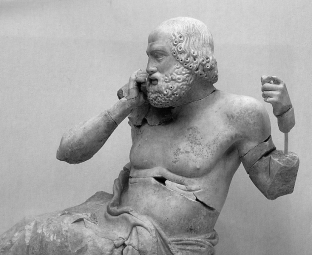 Panhellenic sanctuaries of Greece is located: the Sanctuary of Olympia. Formerly encircled by a large temenos, the Altis, in which Altar of Zeus and Pelopion, the cult of the hero Pelops, existed, this sacred area, in later periods, obtained many buildings activities which were crowned by the completion of the Temple of Zeus.[1]The construction process of the temple began in 470 BC[2]and completed in 456 BC[3]; built with the Doric order, it was the offering of Elis, a nearby city-state which defeated Pisa before deciding to build the temple. The only ancient source about the temple, Pausanias relates that the temple was paid of the spoils of the war, and its architect was Libon of Elis:
“The temple and the image were made for Zeus from spoils, when Pisa was crushed in war by the Eleans, and with Pisa such of the subject peoples as conspired together with her. (…) The temple is in the Doric style, and the outside has columns all around it. It is built of native stone. (…) The architect was Libon, a native. The tiles are not of baked earth, but of Pentelic marble cut into the shape of tiles.”[4]
The building activities in the Altis, except for the Temple of Zeus, and the other sculptures in the Altisor in the temple (the gigantic statue of Zeus made by Pheidias for example) are out of this paper’s scope. This research rather focuses on temple’s east and west pediments, as well as its 12 metopes which adorned the façade and the back of the temple. What is depicted on each pediment and on metopes will be discussed separately in this paper later. However, modern scholarly debates, apparently, agreed upon the subjects of each pediment and metopes, and they are also fit with Pausanias’ 1stcentury account, although scholarly debate continues still about the identification of the each figure[5]and also modern scholars disapprove the names that Pheidias gave as the sculptor of the figures[6]:
“To come to the pediments: in the front pediment there is, not yet begun, the chariot-race between Pelops and Oenomaus, and preparation for the actual race is being made by both. An image of Zeus has been carved in about the middle of the pediment; on the right of Zeus is Oenomaus with a helmet on his head, and by him Sterope his wife, who was one of the daughters of Atlas. (…) What he carved on the pediment [the west pediment] is the fight between the Lapithae and the Centaurs at the marriage of Peirithous. In the center of the pediment is Peirithous. (…) Most of the labours of Heracles are represented at Olympia. Above the doors of the temple is carved the hunting of the Arcadian boar, his exploit against Diomedes the Thracian, and that against Geryones at Erytheia; he is also about to receive the burden of Atlas, and he cleanses the land from dung for the Eleans. (…)”[7]
However, this paper does not mention these issues and also it is said that modern scholars generally agreed upon the literal subjects of each element. However, the comments about the underlying stimulus for carving such sculptures, choosing such subjects for the decoration of the temple, the exact meaning of them, and about the intended audience vary. Many scholars bring forth different suggestions yet the exact meaning of the sculpted narrative on the pediments and metopes has not been decided yet. However, some common proposals appear such as military commemoration or conflict of dikē and hybrisor civilization and barbarism. Admitting previous proposals, this paper acknowledges what Judith Barringer proposes.[8]Hence, the aim of this research is to exhibit that the intended beholder of the sculptures of the Temple of Zeus at Olympia was the athletes and that its sculptural program is linked with the context of Olympic games: not with ethical exhortations (dikē contrary to hybris) with the military victories which were widely commemorates throughout Greece.
As for the overall explanation of the message of the Temple, different scholars have various proposals. Scott advocates that the temple was made for military commemoration: “The temple was the biggest military commemoration the sanctuary had ever seen (…)”[9]He also stresses its local narrative: “The themes of the pedimental and metope sculpture spoke to local interest: the story of Pelops, (…) the story of Herakles, the mythical founder of the Olympic games.”[10]In this sense, his argumentation is that the whole temple was an agent for the Peloponnesian interests: “This was a sanctuary made of, by, and for the Peloponnese.”[11]According to him, the temple acted as a tool for Elean political agenda. He says that Theseus’ (an Athenian hero) presence in the west pediment is a reminder of that the Eleans attempted to ally themselves with Athenians, when they fought against Sparta.[12]Whereas, Hurwit thinks that the whole temple is the embodiment of dikē, the Greek justice, divinely arrranged right order: “ ‘Justice’ is the central theme of the sculptural program of the temple of Zeus at Olympia.”[13]As to Kyrieleis, he deems the whole temple as a tool for the Elean political agenda like Scott:
“The reorganization of the Greek states led to an increase of reminiscences of local myths and mythical traditions. Not only could these be used to legitimize territorial claims, but they also made it easier for the citizens to identify with the new state.”[14]
Tersini, also, relates that, in modern scholarship, the east pediment is deemed as the memorial of the victory of Elis over Pisa and of the legend that led to the Olympic games, that is appropriate for the Scott’s explanations, whereas the west pediment is the symbol of the recent Greek victory over Persia, hence the civilization over barbarism.[15]She also thinks that the maintenance of the dikēby Zeus and Apollo found physically a place in the pediments, similar to what Hurwit suggested: “(…) their spiritual union in this regard, I believe, is represented physically at Olympia.”[16]In this sense, her research acknowledges previous comments on the sculptural program of the temple: “The present interpretation does not exclude previous ones that see the pediments as alluding to past historical events -namely the funding of the Olympic games, the victory of Elis over Pisa (…), and the recent victory over Persia.”[17]What Tersini proposes, explaining the matter of the sculptures of the pediments and metopes, is the conflict of dikē and hybris, and dikē’s eventual supremacy over hybris:
“Apollo and Zeus, then, both represent dikē or justice, the fifth-century preoccupation that most accept as precisely the message of the pediments. Dikēand hybris can serve as an explanation for both the subjects represented and the presence of Apollos and Zeus.”[18]
Moreover, her focus on the notion of wedding is stimulating. However, the marriage is inevitably linked with the social order, in her view, according to the pediments, since in each pediment, on the east it is implied but on the west the nuptial setting is obvious, actions around a certain wedding were depicted: “If the central issue of the pediments is dikē, the proper order of things, the context chosen to express that order is marriage, represented in each pediment by a wedding.”[19] Besides, Ashmole and Yalouris put the notion of supremacy of civilization over barbarism into their commentary on the sculptures: “His presence ensures that civilized man shall prevail.”[20]However, they also acknowledge that the metopes that depicted labors of Herakles are the embodiment of the rules according to which an athlete should behave. [21]This paper places emphasis on what Barringer commented on the sculptures of the pediments and metopes of the Temple of Zeus at Olympia. Barringer writes that former explanations on those sculptures were opt to deem them as warnings about the excessive hybris and tokens of eventual justice or embodiments of previous political events. She also disapproves those explanations which exclude the Temple of Zeus from its Olympian context.[22]Rather, what she advocates is that sculptures on the pediments and metopes were carved to be a model for the athletes who came Olympia to participate the athletic contests and they are tied with the Olympian context: “Their themes are closely related to Olympia, its politics, and religious activities, and served as mythological exemplar to the many viewers, particularly the athletes at the site.”[23]
In this paper for the identification of the figures what Stewart suggested is used as base.[24]Consequently, what the east pediment depicted the moment before the chariot race between Pelops and Oinomaos. According to Pindar,[25]Oinomaos was informed by the oracle that his son-in-law would kill him. So the king began to challenge each suitor race with him. Pelops was the fourteenth suitor who was also Zeus’ grandson, he prayed to Poseidon, who was also his lover, hence he was given winged horses to win the race and after all to take Hippodameia, Oinomaos’ daughter, as his wife. The second account links the occasion not the divine favor[26]but to a bribery. Pelops bribes Oinomaos’ charioteer Myrtilos to alter the linchpins of the wheels of Oinomaos’ chariot with was. Then it led to disintegration of the chariot: Oinomaos was killed and Myrtilos, after trying to rape Hippodameia, was thrown into the sea. [27]The figures in the east pediment (Fig. 1) were then designated concerning this incident: Zeus is at the very middle, flanked by Pelops, at right, at Oinomaos. Pelops is accompanied by Hippodameia whereas Oinomaos by Sterope, his wife. At the very left River god (Alpheios or Kladeos)[28]lies. Ashmole and Bernard connects the scene with the Elean victory over Pisa.[29]According to Scott this sculpture group is a reflection of the style of many sculptures that erected as the military and athletic commemorative statues.[30]Hurwit thinks that Pelops here is the ‘restorer of custom and order to society, agent of divine distribution, and the vehicle of the dikē of Zeus.’[31]As to Kyrieleis, Eleans deemed Pelops as a local hero, with whom they could qualify themselves, giving him a place in this pediment:
“If the temple of Zeus was an extraordinary demonstration of the new state’s economic power and political goals, the depiction of Pelops in the East pediment may be seen as the desire to transform the prototypical Peloponnesian hero into a figure with whom the Eleans could identify in much the same way as the Athenians did with Theseus.”[32]
Oinomaos’ presence in this pediment is explained by Tersini in terms of his extreme hybris. Here, the deed through which Oinomaos felt into such hybris is that he prevents his daughter’s marriage, hence hinders the divine order to occur.[33]However, Pedley’s and Barringer’s comments differ from previous ones. Pedley suggests that the chariot race in the east pediment is proper for the Olympic games which held at the site where the Temple of Zeus located and Zeus’ acted in this pediment as a referee.[34]Barringer also confirms that the east pediment, at first, exhibit a chariot race, an event led to Olympic games, so it obviously related with the Olympian context.[35]She also links the seers near the both ends of the pediment with the oracle at Olympia, (Fig.2) as well as the representations of the rivers Alpheios and Kladeros at each ends[36], since Kladeros and Alpheios are nearby rivers surrounding the area.[37]Moreover, her main point in constructing the meaning of the east pediment is the link between the athletic contest with war since both Pelops and Oinomaos wear hoplite armor: they wear helmets and originally held spears. Pelops formerly had also a shield and wore cuirass. Their attire was similar with what contestants in the chariot races wore.[38]Besides, Barringer, giving plenty of military dedications offered to the sanctuary as proof, also referring some ancient sources that combined athletics with military, links warfare with athletic agonism: “(…) athletic competition was regarded as excellent preparation for warfare and was ideal for training young warriors to fight.”[39]
In the west pediment (Fig.3), the setting narrates the fighting between Centaurs and Lapiths at the wedding of Peirithoos who was also grandson of Zeus[40]and the king of Lapiths. Apollo is standing at the center flanked by the interwoven figures fighting each other. Pedley commented it as a allegory of the supremacy of civilized over barbarian.[41]Hurwit, as with the east pediment, gives importance to the notion of hybris. According to him it shows “the punishment of the centaurs for their violence (hybris) and their violation of hospitality and social order.”[42]Tersini, like Hurwit, suggests that the presence of the centaurs here is because of their excessive hybris, a hybrisarose from not only their instinctual wildness but also their corruption of divinely arranged order:
“Their violence results not only from their general lack of self-control, sophrosyne, but also from overstepping their bestial lot by trying to mate with mortal women, who belong to a higher order of being.” [43]
Stewart relates the pediment with the recent Greek victory over Persians, thereby civilized over barbarians.[44]However, Scott acknowledges that the west pediment is a wrestling scene, reminder of the Olympic games.[45]What Barringer thinks about the west pediment is mainly based on the relationship with the Olympian context in general. And the most solid evidence she gave is the Lapith with cauliflower eye in the west pediment. (Fig.4) Since cauliflower is a physical deformity mostly seen in wrestlers and boxers, the identification of the participant athletes’ themselves with the Lapiths depicted on the west pediment was easy. [46]The presence of the Apollo in her comment is also stressed in terms of the oracle and Olympia and the exhortation of his presence to the athletes:[47]
“Rather than a negative exemplum, the west pediment, read together with the east pediment, was intended to be an inspiring exhortation to the Olympic athletes: ‘Successful athletes, who behave like heroes such as Pelops, Theseus, and Perithoos, will win honor, glory, and wives not by violence like the Centaurs but by athletic prowess and martial honor in both types of agones.”[48]
Metopes of the Temple of Zeus depict the Labors of Herakles. What the metopes might suggest is discussed less and it seems that the proposals provide common notions for explaining the metopes: the first one is the dichotomy of civilization and barbarism, the second is the association of Herakles with the athletes. Hurwit takes the first approach, likening the labors that Herakles challenges to barbarian deeds, in which Herakles is seen as a hero that restore the civilization and dikē: “Herakles eliminating the creatures and monsters that threaten civilization and order.” [49]According to Ashmole, Herakles is a model for how an athlete should be and behave: the purpose of these metopes is to remind the participants to be ‘self-disciplined, determined, and courageous.’[50]Stewart supposes that Herakles in these metopes is a powerful symbol of self-development, manly virtue, arete, and the imperative model that an man must attain:
“And so Herakles’ development progress, labor by labor, until in the tenth metope (physically the most demanding of all) he can even allow a slow smile of satisfaction to flicker across his age-softened features as his task nears completion. Intelligence and tact, learned from Athena, now supplement sheer brute force, as he cushions his shoulders against the weight of the sky.”[51]
According to Barringer, Herakles is the exact model of the best athlete, it is the course, that the athletes must follow, to be the best athlete. [52]The most solid evidence she gives, like the Lapith with cauliflower ear in the west pediment, is that Herakles in the Nemean lion metope has a cauliflower ear and she also stresses the gradual development of Herakles from his youth to the old age: “The hero’s aging appearance over series of metopes, moving from unbearded youth to bearded, full-bodied adult, may reflect the Olympic athletes coming of age.”[53]
To sum up, the Temple of Zeus at Olympia is among the most studied temples of the Greek classical period, and around which plenty of debates occurred. Having the Doric order in its architecture, this temple hosts two pediments and 12 metopes carved with sculptures. The east pediment depicts the previous moment before the chariot race between Pelops and Oinomaos, whereas the west pediment narrates a centauromachy. Metopes deal with the labors of Herakles. Having said the plain narration that these sculptures suggest, different scholars have varying proposals for decoding their exact message. This paper mainly mentions the first suggestions that generally relate that the stimulus behind the sculptural program of the Temple of Zeus is either military commemoration or the conflict between dikē and hybris. Whereas, mostly depended on Barringer’s article[54], this research suggested that alternative readings of the sculptures are the message that exhorts how an athlete should behave and the relationship between the sculptures and its Olympian context.
Images
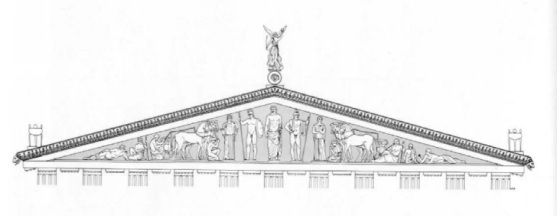
Figure1 Reconstruction of the East Pediment[55]
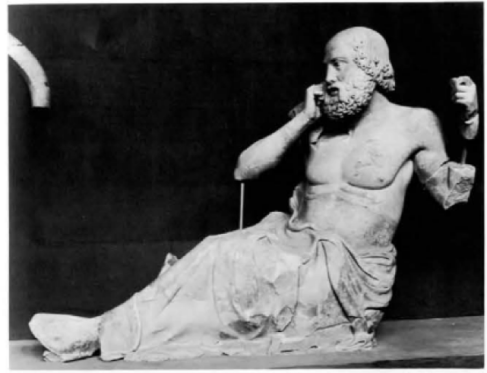
Figure2 The Old-Seer[56]
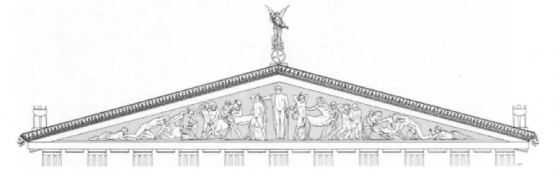
Figure3 Reconstruction of the West Pediment[57]
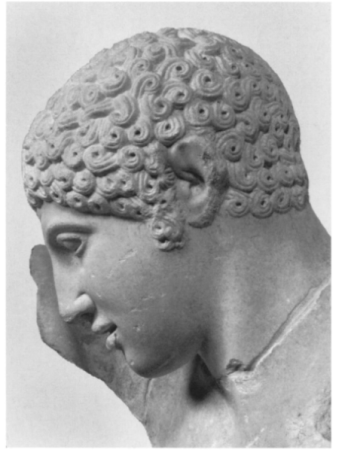
Figure4 Lapith with cauliflower ear[58]
Notes
[1](Pedley 2009, 119-125)
[2]Pedley and Barringer give this date, whereas Scott advocates that the construction process was began in 471 BC. (Pedley 2009, 123)(Scott 2014, 183) (Barringer, The Temple of Zeus at Olympia, Heroes, and Athletes 2005, 211)
[3]Pedley alternatively says that the date completion date is 450 BC. (Pedley 2009, 123)
[4]Pausanias 5.10.2-4 (trans. W.H.S. Jones and H.A. Ormerod)
[5](Stewart, Greek Sculpture: An Exploration 1990, 143)
[6]Ibid., 142
[7]Pausanias 5.10.6-9 (trans. W.H.S. Jones and H.A. Ormerod)
[8](Barringer, The Temple of Zeus at Olympia, Heroes, and Athletes 2005)
[9](Scott 2014, 183-84)
[10]Ibid., 184
[11]Ibid., 185
[12]Ibid., 186
[13](Hurwit 1987, 6)
[14]Ibid., 23
[15](Tersini 1987, 140)
[16]Ibid., 147
[17]Ibid., 150
[18]Ibid., 148
[19]Ibid., 152
[20](Ashmole and Yalouris 1967, 17)
[21](Ashmole and Yalouris 1967, 22)
[22](Barringer, The Temple of Zeus at Olympia, Heroes, and Athletes 2005, 211)
[23](Barringer, Olympia: More than Meets the Eye 2013, 40)
[24](Stewart, Greek Sculpture: An Exploration 1990, 143)
[25]Ibid., 143
[26](Barringer, The Temple of Zeus at Olympia, Heroes, and Athletes 2005, 218)
[27](Stewart, Greek Sculpture: An Exploration 1990, 143)
[28](Ashmole and Yalouris 1967, 13)
[29]Ibid., 12
[30](Scott 2014, 185)
[31](Hurwit 1987, 6)
[32](Kyrieleis 1997, 24)
[33](Tersini 1987, 148)
[34](Pedley 2009, 121)
[35](Barringer, The Temple of Zeus at Olympia, Heroes, and Athletes 2005, 221)
[36]Ibid., 223
[37](Pedley 2009, 119)
[38](Barringer, The Temple of Zeus at Olympia, Heroes, and Athletes 2005, 228)
[39]Ibid., 228
[40]According to Barringer, Peirithoos was the son of Zeus. (Barringer, The Temple of Zeus at Olympia, Heroes, and Athletes 2005, 233)
[41](Pedley 2009, 125)
[42](Hurwit 1987, 6)
[43](Tersini 1987, 149)
[44](Stewart, Greek Sculpture: An Exploration 1990, 144)
[45](Scott 2014, 185)
[46](Barringer, The Temple of Zeus at Olympia, Heroes, and Athletes 2005, 234)
[47]Ibid., 236
[48]Ibid., 236
[49](Hurwit 1987, 6)
[50](Ashmole and Yalouris 1967, 22)
[51](Stewart, Greek Sculpture: An Exploration 1990, 145)
[52](Barringer, The Temple of Zeus at Olympia, Heroes, and Athletes 2005, 236-37)
[53]Ibid., 237
[54](Barringer, The Temple of Zeus at Olympia, Heroes, and Athletes 2005)
[55](Stewart, Greek Sculpture: An Exploration 1990)
[56]Ibid.
[57]Ibid.
[58](Barringer, The Temple of Zeus at Olympia, Heroes, and Athletes 2005, 234)
Bibliography
Ashmole, Bernard, and Nicholas Yalouris. 1967. Olympia: The Sculptures of The Temple of Zeus.London: Phaidon.
Barringer, Judith M. 2013. “Olympia: More than Meets the Eye.” Classics Ireland(Classical Association of Ireland) (19-20): 26-49.
Barringer, Judith M. 2005. “The Temple of Zeus at Olympia, Heroes, and Athletes.” Hesperia: The Journal of the American School of Classical Studies at Athens(The American School of Classical Studies at Athens) 2 (74): 211-241.
Hurwit, Jeffrey M. 1987. “Narrative Resonance in the East Pediment of the Temple of Zeus at Olympia.” The Art Bulletin(CAA) 1 (69): 6-15.
Jones, W.H.S, ve H.A. Ormerod., trans., 1918. Pausanias, Description of Greece.Cambridge, MA: Harvard University Press.
Kyrieleis, Helmut. 1997. “Zeus and Pelops in the East Pediment of the Temple of Zeus at Olympia.” Studies in the History of Art(National Gallery of Art) (49): 12-27.
Pedley, John Griffiths. 2009. Sanctuaries and the Sacred in the Ancient Greek World .New York: Cambridge University Press.
Scott, Michael. 2014. Delphi and Olympia: The Spatial Politics of Panhellenism in the Archaic and Classical Periods.Cambridge: Cambridge University Press.
Stewart, Andrew. 1990. Greek Sculpture: An Exploration.Vol. 1. London: Yale University Press.
—. 1990. Greek Sculpture: An Exploration.Vol. 2. London: Yale University Press.
Tersini, Nancy D. 1987. “Unifying Themes in the Sculpture of the Temple of Zeus at Olympia.” Classical Antiquity(University of California Press) 1 (6): 139-159.


I am astonished by your works please keep it up
with my best regards
Ozgenc, Ebru
BeğenLiked by 1 kişi